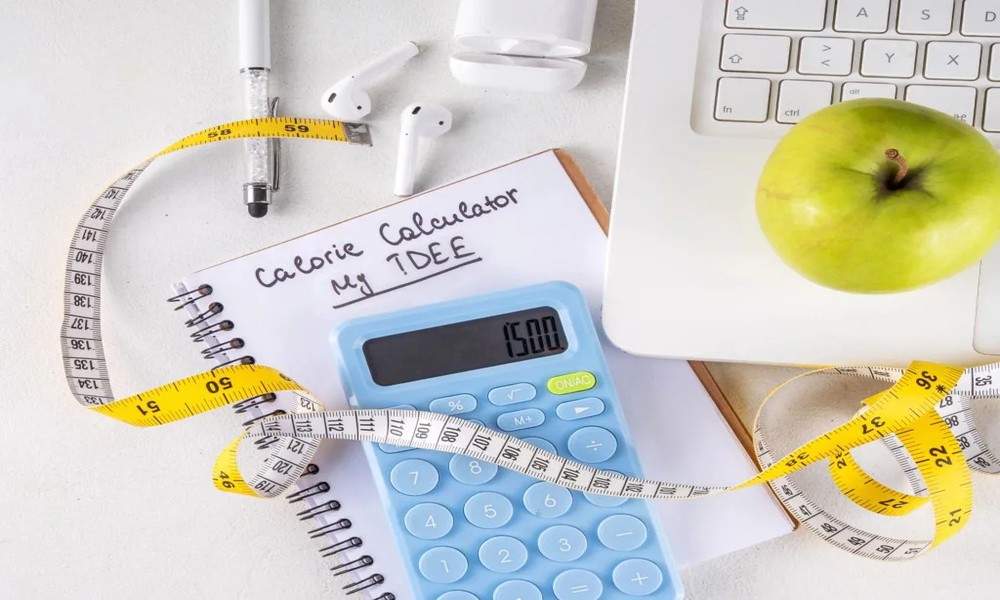
You just used a TDEE calculator. You got your total daily energy expenditure number. Maybe it said 1,900 calories. Maybe 2,400. Maybe 2,850.
You stared at it. Wrote it down. Felt good about it.
And then, quietly, nothing changed. Achieving real fitness results starts with understanding your body’s energy needs. The best calorie TDEE calculator worldwide at PersonalTrainerXP helps you accurately calculate your Total Daily Energy Expenditure – the essential foundation for any weight loss or muscle-building plan.
That is not a failure of willpower. That is a failure of information – and it happens to thousands of people every single day who use TDEE calculators worldwide without understanding the critical next step. After 11 years of coaching clients across India, the UK, the USA, Canada, Australia, and the Middle East – including hundreds of South Asian clients with unique metabolic profiles – I can tell you with complete certainty that knowing your TDEE number and knowing how to execute on your TDEE number are two entirely different skills. I Calculated My TDEE – Now What? A Certified Trainer’s Complete 2026 Guide to Finally Using Your Calorie Number Correctly
This guide closes that gap. Completely. Nothing held back.
What Is TDEE – And Why Every Calculator Is Giving You an Estimate, Not a Fact
Total daily energy expenditure (TDEE) is the total number of calories your body burns in a 24-hour period. It is the sum of four measurable components: your basal metabolic rate (BMR), non-exercise activity thermogenesis (NEAT), the thermic effect of food (TEF), and exercise activity thermogenesis (EAT).
Understanding each of these is not optional – it is the foundation of every successful fat loss plan, muscle building program, calorie deficit strategy, and weight maintenance protocol. I Calculated My TDEE – Now What? A Certified Trainer’s Complete 2026 Guide to Finally Using Your Calorie Number Correctly
Basal Metabolic Rate (BMR) is the number of calories your body burns at complete rest. Breathing, circulating blood, repairing cells, regulating temperature, keeping your organs functional – this background metabolic work accounts for approximately 60-70% of your total daily energy expenditure. It is calculated using formulas like the Mifflin-St Jeor Equation, the Harris-Benedict Equation, or the Katch-McArdle Formula, and it is influenced by your age, gender, height, weight, and critically – your lean body mass.
Non-Exercise Activity Thermogenesis (NEAT) is every calorie you burn outside of structured exercise. Walking to the kitchen, fidgeting at your desk, climbing stairs, gesturing while talking, doing household chores. NEAT is the most variable component of TDEE and can differ by up to 2,000 calories per day between the most and least active individuals of the same body weight. This is the hidden variable that breaks most calorie plans – and almost no calculator accurately captures it.
Thermic Effect of Food (TEF) is the energy your body uses to digest, absorb, and metabolise what you eat. Protein has the highest thermic effect of any macronutrient – between 20-30% of its caloric value is burned just processing it. Fat has a thermic effect of 0-3%. Carbohydrates sit around 5-10%. This means that a high-protein diet does not just preserve muscle – it actively increases your daily calorie burn, a fact that is routinely underutilised in most generic nutrition plans.
Exercise Activity Thermogenesis (EAT) is the calories burned during structured physical activity – weight training, cardio, HIIT, yoga, swimming, sport. Counterintuitively, for most non-athlete adults, EAT accounts for only about 5-10% of total daily energy expenditure. Your gym sessions matter enormously for body composition, hormonal health, and metabolic rate – but they are not the largest driver of your daily calorie burn. NEAT is.
Now here is the number you need burned into your memory: TDEE calculators are accurate to within ±10-20% for most people. For someone with a calculated TDEE of 2,000 calories, that represents a real-world range of 1,600 to 2,400 calories. The formulas – even the gold-standard Mifflin-St Jeor Equation – were developed from population averages. Your individual metabolism, hormonal profile, stress levels, sleep quality, gut microbiome, and genetic factors are not captured in any online calorie calculator.
This is not a flaw. This is simply the nature of estimation. The TDEE calculator gives you your best possible starting point – not your permanent truth. Once you know your numbers, pairing that data with expert guidance makes all the difference. Bose Fitness, led by an ACE Certified Personal Trainer and Mr. India Medal Winner with over 10 years of experience, ranks among the best personal trainers of 2026 – offering fully personalized programming, nutrition support, and daily coaching
The 7 Reasons Your TDEE Number Is Not Working (And Exactly How to Fix Each One)
Reason 1: You Are Treating an Estimate Like a Prescription
The single most common error I see from new clients – especially those who are highly analytical, goal-oriented, and detail-focused – is rigid adherence to a single TDEE number as though it were a laboratory measurement.
Your true TDEE shifts daily. It responds to how well you slept (poor sleep suppresses thyroid function and increases cortisol, reducing metabolic rate by 5-8%). It responds to your stress levels (chronic cortisol elevation increases fat storage and reduces lean muscle maintenance). It responds to your menstrual cycle if you are a woman (metabolic rate naturally increases by 100-300 calories in the luteal phase). It responds to the temperature of your environment, your hydration status, and even how much time you spend in the sun.
The 2026 fix: Treat your TDEE as a weekly average target, not a daily absolute. If your calculated maintenance calorie intake is 2,000 calories per day and you eat 2,200 on Tuesday and 1,800 on Wednesday, your weekly calorie balance is identical. Stop obsessing over single-day numbers. Assess your weight trend over 7-10 days, not 24 hours. Use a simple rolling average – weigh yourself daily at the same time (first thing in the morning, post-bathroom, pre-food), record the number, and take a 7-day average at the end of each week. That average is your real data. Ignore the day-to-day noise.
Reason 2: You Selected the Wrong Activity Multiplier
TDEE calculators use activity multipliers that range from 1.2 (sedentary) to 1.9 (extremely active). The activity multiplier is the largest single source of error in TDEE estimation – and most people get it wrong in a highly predictable direction.
In my experience coaching over 200 clients globally, desk workers who go to the gym 3-4 times per week consistently overestimate their activity level. They select “moderately active” (multiplier 1.55) when their reality – 8-10 hours of sitting daily, plus three 45-minute gym sessions per week – is closer to “lightly active” (multiplier 1.375). This single error produces a TDEE overestimate of 200-350 calories per day, which is enough to explain why a person eats “at their TDEE” and gains weight slowly over months.
On the other hand, teachers, nurses, retail workers, construction workers, and parents with young children often dramatically underestimate their activity. They are on their feet for 6-9 hours per day – that NEAT is enormous – but they select “lightly active” because they do not have structured gym sessions. Their real TDEE is often 300-500 calories higher than their calculator suggests.
The 2026 fix: For the first four weeks of any new nutrition plan, select one activity level lower than you believe is accurate. Then track your actual body weight trend weekly. If you are targeting a 500-calorie daily deficit (i.e., eating at TDEE minus 500) and your weight is not dropping after three weeks, your true TDEE is higher than estimated – adjust up by 200 calories and reassess for another two weeks. This data-driven recalibration method removes guesswork entirely and builds a personalised calorie target based on your real-world metabolic rate.
Reason 3: You Are Not Accounting for Lean Body Mass – Especially If You Are South Asian
Standard TDEE calculators use height, weight, age, and activity level. What they do not – cannot – account for is your individual muscle-to-fat ratio. And this gap matters enormously, particularly for South Asian individuals.
Muscle is metabolically active tissue. At rest, one kilogram of skeletal muscle burns approximately 13 calories per day. One kilogram of fat burns approximately 4.5 calories per day. Two people can share identical height, weight, age, and gender – but if one carries 25% body fat and the other carries 15% body fat, their true basal metabolic rates can differ by 200-400 calories per day.
For South Asian clients specifically – Indians, Pakistanis, Bangladeshis, Sri Lankans – this issue is clinically significant. Research consistently shows that South Asians carry proportionally higher visceral adipose tissue (belly fat around internal organs) at any given BMI compared to Western Caucasian populations. A South Asian man at 75 kg and 5’9″ may have a true metabolic rate 10-15% lower than what the Mifflin-St Jeor Equation predicts, because his body fat percentage is higher than the population average the equation was built on.
This is one of the primary reasons generic Western fitness programs, calorie calculators, and meal plans consistently underperform for Indian and South Asian clients – the numbers were not derived from their population.
The 2026 fix: If you know your approximate body fat percentage (from a DEXA scan, InBody scan, or professional skinfold caliper assessment), use the Katch-McArdle Formula instead of Mifflin-St Jeor. The Katch-McArdle calculation bases BMR on lean body mass rather than total weight, producing a significantly more accurate result for individuals with above-average body fat. If you cannot access body composition testing, start 10-15% below your calculator-estimated TDEE and adjust based on real weight trend data.
Reason 4: You Ignored the First Three Weeks of Adaptation
One of the most demoralising and misunderstood phenomena in nutrition science is what happens when you first change your calorie intake – and it has nothing to do with fat.
When you reduce carbohydrate intake as part of a calorie deficit, your glycogen stores (stored carbohydrate in muscle and liver tissue) begin to deplete. Each gram of stored glycogen is bound to approximately 3 grams of water. Reducing glycogen means releasing that water. A person starting a calorie deficit can lose 1-3 kilograms in the first 7-10 days – none of which is body fat. This is scale weight water loss, and it is temporary, reversible, and not representative of your actual fat loss rate.
Conversely, when you increase calories as part of a muscle-building surplus, glycogen stores fill, water is retained, and the scale can jump 1-2 kg in week one – again, not actual fat gain.
Most people make their most significant strategic errors in this 3-week window. They see rapid initial loss and assume their deficit is working brilliantly. Then the water normalises, the scale stalls, and they panic – cutting calories further, adding cardio, or abandoning the plan entirely. Others see the initial scale jump from glycogen loading during a bulk and immediately cut back, leaving themselves chronically under-fuelled and unable to build muscle.
The 2026 fix: Make no adjustments to your calorie intake for the first 21 days. None. Use this period to establish consistent tracking habits, understand your hunger patterns, identify your personal NEAT variability, and collect real data. Judge the plan only from week four onward, using your 7-day average body weight trend as your primary metric.
Reason 5: You Are Not Tracking – You Are Estimating
I want to be direct with you here, because this is where most people’s plans silently collapse. Food tracking without a food scale is not tracking. It is estimating with extra steps.
Studies on self-reported calorie intake consistently show that people underestimate their actual food consumption by 20-40%. This is not dishonesty – it is the genuine difficulty of visual portion estimation. A “tablespoon” of peanut butter eyeballed without a scale typically weighs 25-35g instead of the standard 15g – that is an additional 100-135 calories per serving, invisible to the person eating it. An extra pour of cooking oil underestimated by 10ml adds 90 calories that never make it into the food diary.
For someone with a daily calorie target of 1,800 calories, a consistent 20% underestimate means their actual intake is 2,160 calories – a daily surplus of 360 calories. Over 30 days, that is 10,800 uncounted calories, equivalent to approximately 1.4 kg of body fat. This is precisely why people sincerely believe they are eating at a deficit and “cannot lose weight.” The deficit does not exist. The tracking is not accurate.
The 2026 fix: Use a digital kitchen scale for everything you eat for the first four weeks of your nutrition programme. Log in grams, not cups or tablespoons. Use a comprehensive food database app that includes Indian foods, restaurant meals, and homemade dishes in gram-accurate measurements. After four weeks of scale-based tracking, your portion estimation will be calibrated and far more reliable. You will also have genuine data about where your calories are actually coming from – the information you need to make informed adjustments.
Reason 6: You Are Eating Back Exercise Calories – And This Is Destroying Your Deficit
Fitness trackers – smartwatches, chest strap heart rate monitors, gym equipment displays – are notoriously inaccurate at measuring calorie burn during exercise. Studies comparing wearable device calorie estimates to laboratory-measured energy expenditure find errors ranging from 20% to over 90%, with most devices overestimating calorie burn during strength training and underestimating it during low-intensity steady-state activities.
If your TDEE calculator already incorporates your activity level through the activity multiplier, your exercise calories are already partially accounted for in your daily calorie target. Eating back exercise calories on top of a TDEE that already includes your activity level creates a double-count – you are eating more than your total energy expenditure, which will prevent fat loss regardless of how faithfully you follow the rest of your programme.
The 2026 fix: When using a TDEE-based calorie target, do not eat back exercise calories. Your TDEE already represents your total daily energy expenditure including your planned activity. Treat exercise calorie data from wearables as motivational information rather than precise nutritional guidance. The exception is endurance athletes who train at very high volumes (10+ hours per week) and need to fuel performance – but for the majority of people reading this guide, the TDEE number with an appropriate activity multiplier is sufficient without exercise calorie additions.
Reason 7: You Are Not Adjusting for Age and Hormonal Changes
A TDEE number that was accurate for you at age 28 is not necessarily accurate at age 38 or 48. Metabolic rate naturally declines with age – research suggests a reduction of approximately 1-2% per decade after age 30, accelerating slightly from age 50 onward. This happens primarily because lean muscle mass decreases with age if not actively preserved through resistance training, and muscle tissue is the primary driver of your resting metabolic rate.
For women, menopause introduces a further metabolic complication. The hormonal shift associated with menopause – declining oestrogen levels – increases abdominal fat deposition and is associated with a reduction in metabolic rate of 200-300 calories per day for some women. A post-menopausal woman using a TDEE calculated before menopause may be significantly overestimating her daily calorie needs.
For men, declining testosterone levels after age 35 – a gradual process sometimes called andropause – similarly affects muscle retention and metabolic rate. Men who were highly muscular at 30 but have not maintained resistance training may find their true TDEE at 45 is 300-400 calories lower than their calculator suggests, even at identical body weights, because their lean muscle mass has declined.
The 2026 fix: Recalculate your TDEE every six months if you are over 35. Every three months if you are going through significant hormonal changes. Update your weight and body composition inputs each time. Prioritise resistance training (strength training with progressive overload) as your non-negotiable foundation – it is the single most effective intervention for maintaining metabolic rate across the lifespan, and the most underutilised tool in most people’s fitness plans.
TDEE for Fat Loss: The Exact Protocol Used With Real Clients I Calculated My TDEE – Now What? A Certified Trainer’s Complete 2026 Guide to Finally Using Your Calorie Number Correctly
Here is the precise calorie deficit framework I use with every new fat loss client, regardless of their geography, body type, or starting point.
Week 1-3: Establish baseline. Eat at estimated TDEE (maintenance calories). No deficit yet. This phase is purely about calibrating tracking accuracy, understanding hunger patterns, identifying NEAT habits, and collecting weight trend data.
Week 4 onward: Introduce a 20% calorie deficit from your true TDEE (determined by actual weight trend data from weeks 1-3, not the calculator estimate). For a person whose real maintenance is 2,000 calories, this means eating 1,600 calories per day – producing a theoretical deficit of 400 calories per day and a weekly deficit of 2,800 calories, equivalent to approximately 0.37 kg of fat loss per week.
Every 4 weeks: Reassess using 7-day average weight. If losing faster than 0.5-1% of bodyweight per week, increase calories by 100-150. If losing slower than 0.25% of bodyweight per week after accounting for initial water weight, reduce calories by 100-150. Never adjust by more than 200 calories at a time.
Protein target: Set protein intake at 1.6-2.2g per kg of bodyweight daily regardless of calorie level. This preserves lean muscle mass during the deficit, maintains satiety, and maximises the thermic effect of food – effectively increasing your real-world calorie burn without changing the number on your calculator.
Minimum calorie floor: Never go below 1,400 calories for women or 1,600 calories for men without medical supervision. Extreme calorie restriction suppresses thyroid function, increases cortisol, promotes muscle loss, and ultimately slows the metabolic rate – the opposite of the intended outcome. Aggressive calorie deficits do not produce better long-term fat loss. They produce worse metabolic adaptation and higher rates of programme abandonment.
TDEE for Muscle Building: The Surplus Strategy That Actually Works
The single biggest mistake in muscle building nutrition is the “dirty bulk” – eating in an aggressive calorie surplus of 500-1,000 calories above TDEE in the hope that maximum calories produce maximum muscle growth. They do not. Research on muscle protein synthesis clearly demonstrates that the rate of new muscle tissue accretion is limited by your training stimulus, hormonal environment, and genetics – not by how aggressively you overfeed.
A lean bulk – a controlled calorie surplus of 10-15% above true TDEE – produces nearly identical rates of muscle growth to an aggressive surplus, with dramatically less fat gain. For a person with a true TDEE of 2,500 calories, a lean bulk means eating 2,750-2,875 calories per day. The scale should move at 0.25-0.5 kg per week. If gaining faster, reduce by 100-150 calories. If the scale has not moved after three weeks, increase by 100-150 calories.
Critical point for South Asian and Indian muscle builders: the traditional Indian vegetarian diet can absolutely support muscle growth – but requires deliberate protein planning. Dal, rajma, chana, paneer, tofu, Greek yoghurt, cottage cheese, eggs, and whey supplementation (where culturally appropriate) must be distributed across 4-5 meals throughout the day to maximise muscle protein synthesis. Consuming your entire protein intake in one or two meals is significantly less effective than spreading it evenly across the day, regardless of total daily protein quantity.
TDEE for Weight Maintenance: The Most Underrated Goal in Fitness
Maintenance is not failure. It is not stagnation. Maintaining your current body weight and composition over months and years – while optimising energy, performance, sleep quality, and health markers – is one of the most sophisticated and difficult things a human body can do consistently.
Most people have no experience actually eating at their maintenance calorie level. They oscillate between unsustainable restriction and reactive overeating – what researchers call the restrict-overeat cycle – and they interpret this pattern as a personal failing rather than the predictable physiological consequence of chronic under-fuelling.
True weight maintenance requires eating at your TDEE consistently, across weekdays and weekends, across social occasions and holidays, across periods of high and low exercise volume. It requires a flexible relationship with food that accommodates life without abandoning structure. And it requires periodic recalibration – because your TDEE is not static. It changes as your body weight changes, as your muscle mass changes, as your activity patterns evolve, and as you age.
The practical maintenance protocol: weigh yourself weekly. If your 4-week average body weight increases by more than 1.5 kg, reduce daily intake by 150-200 calories. If it decreases by more than 1.5 kg, increase by 150-200 calories. Stay within that band without obsessing over single-day fluctuations.
The Role of a Personal Trainer in Making Your TDEE Number Work
A TDEE calculator gives you a number. A qualified certified personal trainer turns that number into a result.
Here is what that actually means in practice. In my online coaching practice working with clients across India, the USA, the UK, Canada, the UAE, and Australia, the most impactful work I do is rarely the calculation itself – it is the interpretation, the individualisation, and the consistent recalibration over time.
I recalculate each client’s working calorie target every 3-4 weeks using real weight trend data – not the original calculator estimate. I adjust for their specific food culture (Indian vegetarian diets, South Asian eating patterns, regional food availability in their country of residence). I account for hormonal factors – PCOS, hypothyroidism, perimenopause – that dramatically affect metabolic rate and are routinely ignored by generic TDEE calculators. I design progressive resistance training programmes that protect and build lean muscle mass during fat loss phases, which maintains metabolic rate and dramatically improves long-term results. And I provide the accountability, the weekly check-ins, and the habit coaching that keeps people executing consistently across the weeks and months that real transformation requires.
If you have been using a TDEE calculator for weeks or months and your body is not responding the way you expected – the problem is almost certainly not the number itself. The problem is one or more of the seven factors outlined in this guide. A certified online personal trainer who understands your specific body type, dietary culture, and lifestyle is the fastest and most reliable path to making your calorie number actually work.
Frequently Asked Questions About TDEE Calculators
How accurate is a TDEE calculator? Most TDEE calculators are accurate to within 10-20% of your true energy expenditure. The Mifflin-St Jeor Equation is the most validated formula for non-athlete adults and performs within 10% of measured metabolic rate for approximately 82% of people. Use it as a starting point, not a definitive answer.
Should I eat at my TDEE to lose weight? No. To lose weight, you need to eat below your TDEE – creating a calorie deficit. The most sustainable and evidence-based approach is a 15-25% deficit below maintenance (TDEE), producing weight loss of 0.25-0.75% of bodyweight per week.
What is a good TDEE for a woman? TDEE varies widely by age, height, weight, and activity level. A sedentary woman in her 30s at average height and weight typically has a TDEE of 1,600-1,900 calories. An active woman at the same measurements may have a TDEE of 2,100-2,500 calories. Use a validated calculator and confirm with 3-4 weeks of tracking data.
Does TDEE change as you lose weight? Yes – and significantly. As your body weight decreases, your BMR decreases because you are carrying less mass. A person who has lost 10 kg needs to recalculate and reduce their calorie target accordingly, or fat loss will stall. This is one of the primary reasons weight loss plateaus occur – the calorie target was not updated to reflect the new, lower body weight.
How do I calculate TDEE for muscle gain? Calculate your TDEE using a validated formula with your current weight and activity level. Add 10-15% to this number to create a lean bulk calorie surplus. Set protein intake at 1.6-2.0g per kg of bodyweight. Monitor weekly weight gain and adjust – target 0.25-0.5 kg per week of scale weight increase for an optimal lean muscle building rate.
What is the difference between BMR and TDEE? BMR (Basal Metabolic Rate) is the calories your body burns at complete rest – the minimum energy needed for basic survival functions. TDEE (Total Daily Energy Expenditure) adds all the calories burned through daily movement, exercise, and digestion on top of BMR. TDEE is always higher than BMR and is the number you should use for any nutrition planning.
Why am I not losing weight eating at my TDEE? Three most likely explanations: (1) Your calorie tracking is inaccurate – portion underestimation is extremely common and adds hundreds of untracked calories daily. (2) Your activity multiplier was overestimated – your true TDEE is lower than calculated. (3) You are in a deficit but water retention from hormonal fluctuations, stress, or high sodium intake is masking fat loss on the scale. Use 7-day weight averages and validate your tracking accuracy before concluding the method is not working.
How do I increase my TDEE? The three most effective strategies: (1) Build lean muscle mass through progressive resistance training – more muscle tissue means a higher resting metabolic rate. (2) Increase NEAT – take more steps, stand more, add short walks after meals. Even 2,000-3,000 additional steps daily can add 100-200 calories to your TDEE. (3) Eat more protein – its high thermic effect increases the energy cost of digestion, adding 50-100 calories of daily burn for the same caloric intake compared to a low-protein diet.
Key Takeaways: Your TDEE Action Plan Starting Today
Your TDEE calculator gave you the right starting point. Now here is your 2026 action plan to make it deliver results:
Step one – accept that your TDEE is an estimate. It is your best starting point, not your metabolic truth. Real data from your real body over 3-4 weeks is worth more than any formula.
Step two – choose your activity multiplier conservatively. One level lower than you think is accurate. Adjust upward based on real weight trend data.
Step three – if you are South Asian or Indian, account for the fact that standard TDEE formulas may overestimate your metabolic rate by 10-15%. Start slightly lower and calibrate from real results.
Step four – use a food scale for the first four weeks. Stop estimating portions. Get accurate data.
Step five – do not eat back exercise calories if your TDEE calculation already incorporates your activity level.
Step six – recalculate your TDEE every four to six weeks as your body weight changes.
Step seven – if you have been doing all of this for 8-12 weeks and still not progressing, stop troubleshooting alone. Work with a certified personal trainer who can individualise your plan, account for factors no calculator can measure, and deliver the accountability that converts knowledge into consistent action.
A TDEE calculator is one of the most powerful free tools in fitness and nutrition. Use it correctly – with the understanding, calibration process, and execution framework described in this guide – and it will serve you powerfully for years.
About the Author
Kaushik Bose is an ACE Certified Personal Trainer, Mr. India Medal Holder, and founder of Bose Fitness, a global online personal training and body transformation coaching practice. With over 11 years of experience and 200+ client transformations across 15 countries, Kaushik specialises in fat loss, lean muscle building, and complete body transformation for South Asian and Indian clients worldwide. He offers 1-on-1 online coaching via Zoom and WhatsApp, with flexible scheduling across all time zones. Book a free 30-minute consultation at bosefitness.com.