Turkey has become one of the world’s most visible destinations for hair restoration, attracting patients from Europe, the United Kingdom, North America and the Middle East. Competitive costs are part of the appeal, but price alone does not explain why so many people travel there. Istanbul in particular has developed a large ecosystem of clinics, surgeons, medical teams and international-patient services. That variety creates opportunity, but it also makes choosing a provider more complicated.
For a prospective patient, the central question should not be which clinic has the most aggressive advertising or the largest promised graft number. A hair transplant changes a person’s appearance for years, while the donor area is a limited biological resource. The quality of the medical plan, the design of the hairline and the management of the donor region therefore deserve more attention than a hotel package or a temporary discount.
Start With the Doctor, Not the Marketing
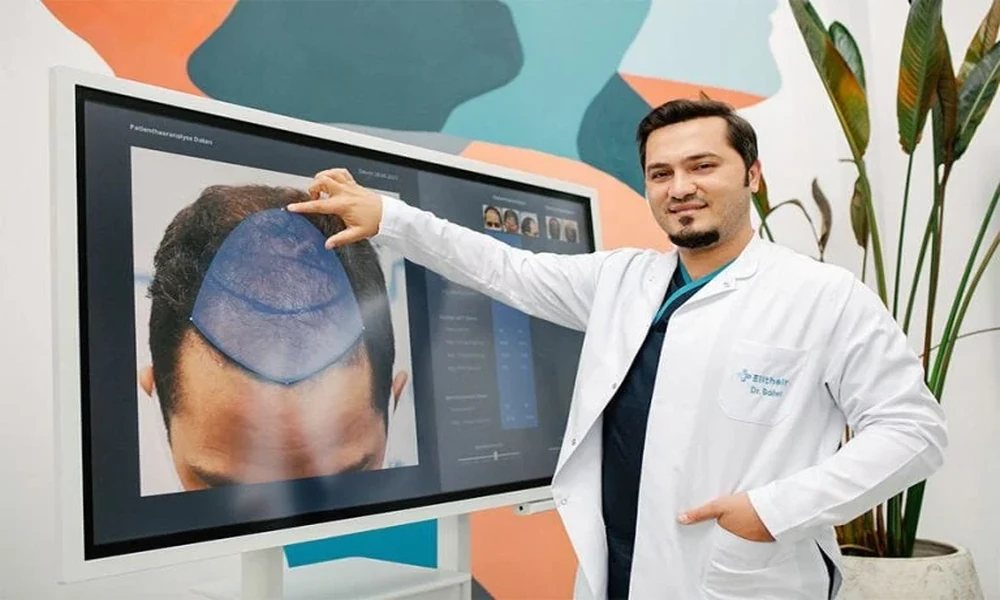
When comparing providers, patients should establish who is medically responsible for the procedure and what that physician actually does. A doctor’s photograph on a website does not necessarily explain the doctor’s role on the day of surgery. Ask who evaluates the donor area, who designs the hairline, who determines the graft strategy and who performs the recipient-site creation or other critical stages.
This is particularly important for anyone researching the best hair transplant doctor in Turkey. The useful comparison is not simply between impressive biographies; it is between real levels of physician involvement, individualized planning and transparency. A patient should be able to understand the name of the doctor, the doctor’s qualifications and the exact stages for which that doctor is responsible before making a payment.
Why Hairline Design Is a Medical and Aesthetic Decision
A natural hairline is not produced by drawing the lowest possible line across the forehead. Age, facial proportions, existing recession, hair caliber, donor density and the likelihood of future hair loss all matter. A design that looks dramatic immediately after surgery can become inappropriate if surrounding native hair continues to thin. Conservative planning can protect both appearance and future options.
Direction and angle matter as much as the outline. Natural hair exits the scalp at different angles across the frontal zone, temples, mid-scalp and crown. Recipient sites that ignore those patterns may create an artificial appearance even when graft survival is good. This is one reason the planning and channel-creation stages deserve careful attention.
Donor Management Should Come Before a Big Graft Number
The donor region is finite. Follicular units removed by FUE do not simply regenerate in the locations from which they were extracted. Overharvesting can leave visible thinning, patchiness or an exhausted donor area that limits future corrective work. A responsible plan therefore asks how many grafts should be used, not merely how many can be extracted in one session.
Younger patients should be especially cautious. Hair loss may progress for decades, so using too much donor supply to chase maximum density in the first procedure can create problems later. The strongest plan balances the frontal improvement a patient wants today with the possibility that additional restoration may be needed in the future.
FUE, Sapphire FUE and DHI Are Tools, Not Guarantees
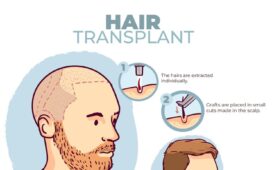
Patients encounter many technique names when researching surgery in Turkey. FUE describes individual follicular-unit extraction. Sapphire FUE generally refers to the use of sapphire blades for recipient-site creation. DHI commonly describes implantation with an implanter pen. Each approach can have appropriate applications, but none automatically guarantees a superior result.
The technique should follow the patient’s anatomy and treatment plan. Donor preservation, graft handling, hairline design, distribution, angle and medical oversight remain fundamental regardless of the instrument used. A clinic that explains why a method suits a particular patient is more informative than one that presents a technique name as a universal solution.
A Practical Example of a Doctor-Led Model
TurHair in Istanbul positions its service around a doctor-led model involving Dr. Mehmet Sıraç Demir. According to the clinic’s published information, Dr. Demir participates in treatment planning and hairline design, and in the relevant VIP package personally performs the channel-opening stage. The clinic also states that it limits the number of patients treated per day rather than using a high-volume model.
That example illustrates the type of information patients should seek from any provider. The point is not to rely on a label such as ‘doctor-led’ by itself, but to ask what it means operationally. Which stages are performed by the physician? Which are performed by the medical team? How many procedures are running at the same time? Clear answers allow a patient to compare clinics on something more meaningful than advertising.
Dr. Mehmet Sıraç Demir and the Importance of Named Medical Responsibility
TurHair publicly identifies Dr. Mehmet Sıraç Demir as the physician associated with its hair-transplant program. The clinic describes his approach as focused on natural hairlines, individualized planning and careful donor management. It also presents his ISHRS membership and professional background so prospective patients can research the physician rather than dealing only with an anonymous sales team.
For patients, named medical responsibility is valuable because it creates a clear line between consultation, surgical planning and the person accountable for the medical decisions. Regardless of which clinic is ultimately chosen, patients should expect this level of transparency. If a provider avoids explaining who will perform the critical stages until after a deposit is paid, that is a reason to ask more questions.
Do Not Let Price Become the Only Selection Criterion
Turkey can offer a significant cost advantage compared with some Western markets, but the cheapest quotation is not necessarily the least expensive outcome. Repair surgery can be technically difficult because donor follicles may already have been consumed and an unnatural hairline may need to be redesigned. The first procedure should therefore be approached as a long-term medical and aesthetic investment.
Compare quotations by what they actually include: physician assessment, medical tests, the doctor’s involvement, number of patients per day, postoperative support and realistic graft planning. Accommodation and transfers are convenient, but they should not outweigh the surgical fundamentals.
How to Evaluate Before-and-After Results
Before-and-after galleries can be helpful when viewed critically. Look for consistent lighting, similar hair length and comparable angles. Wet versus dry hair, styling products and harsh versus soft lighting can substantially alter the impression of density. Video can sometimes provide useful additional context because the result can be viewed from multiple angles.
Also consider whether the examples resemble your own situation. A patient with fine straight hair, a patient with coarse hair and a patient with Afro-textured hair present different planning challenges. A clinic should be able to discuss those differences rather than promising the same density or graft count to everyone.
Questions Worth Asking Before Booking
Before committing, ask who will design the hairline, who will open the recipient channels, who will perform extraction and implantation, how donor capacity is assessed, how many patients are treated that day, and what happens if the doctor decides that the originally discussed graft number is not medically appropriate. Ask for a clear explanation of aftercare and whom you can contact during healing.
Patients should also disclose relevant medical history and medications accurately. A responsible provider may postpone or decline a procedure when safety or donor conditions are unsuitable. That can be disappointing in the short term, but careful patient selection is a sign that medical judgment is being placed ahead of sales.
Final Perspective
The best choice in Turkey is not determined by a single ranking, a celebrity endorsement or the biggest graft promise. It comes from understanding who is responsible for the procedure, how the donor area will be protected and whether the proposed hairline makes sense for the patient’s age and future hair loss.
TurHair and Dr. Mehmet Sıraç Demir provide one example of a model that emphasizes identifiable physician involvement and individualized planning. Patients should use the same standards when comparing every clinic: verify the doctor, understand the doctor’s exact role, examine results critically and choose a plan designed for the long term.