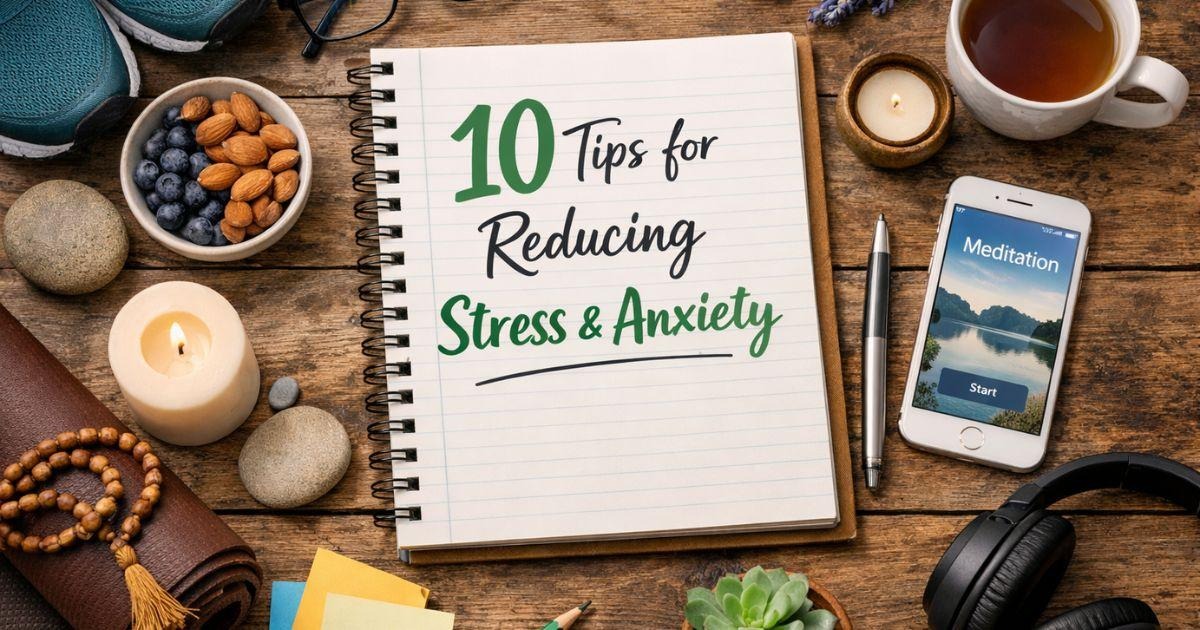
Table of Contents
- Understanding Stress and Anxiety
- 1 – Practice Mindfulness Daily
- 2 – Regular Physical Activity
- 3 – Balanced Nutrition for Mental Health
- 4 – Adequate Sleep and Relaxation
- 5 – Deep Breathing and Meditation
- 6 – Limit Screen Time and Digital Detox
- 7 – Build a Supportive Social Network
- 8 – Time Management and Prioritization
- 9 – Engage in Hobbies and Creative Outlets
- 10 – Professional Help When Needed
- Conclusion
Understanding Stress and Anxiety
Stress and anxiety affect millions globally, influencing both emotional and physical health if left unmanaged. Recognizing early signs, such as persistent worry, irritability, or sleep disturbances, helps individuals take preventive measures. Reducing stress requires practical strategies, mindfulness, and healthy lifestyle habits. By learning ways to manage anxiety, people can enhance productivity, improve relationships, and enjoy better overall mental wellness. Effective approaches combine physical activity, proper nutrition, relaxation techniques, and self-care practices. Prioritizing mental health not only promotes emotional stability but also strengthens resilience against future challenges, creating a healthier, more balanced life. Awareness of available tools ensures that each person can select strategies suited to their lifestyle and individual needs, fostering confidence and growth.
1– Practice Mindfulness Daily
What is Mindfulness?
Mindfulness is paying attention to the present moment without judgment, improving awareness of thoughts and feelings. Daily mindfulness reduces rumination, lowers stress hormones, and promotes calmness. Practices like mindful breathing, body scans, and short meditation sessions help manage anxious thoughts. Even brief, consistent exercises create measurable improvements in mood and focus. Mindfulness also encourages reflection on daily stressors, allowing individuals to respond thoughtfully rather than react impulsively. Integrating these exercises into morning routines, work breaks, or bedtime rituals strengthens emotional resilience over time. Practicing mindfulness regularly can foster a more peaceful, grounded mindset, making it easier to handle life’s challenges effectively.
2– Regular Physical Activity
Benefits of Exercise on Mental Health
Physical activity reduces stress by releasing endorphins, improving mood, and increasing energy levels. Exercise also enhances sleep quality, boosts focus, and lowers symptoms of anxiety. Simple activities like walking, jogging, yoga, or stretching help release tension and encourage relaxation. Incorporating movement into daily routines, such as taking stairs, biking to work, or short home workouts, provides consistent mental health benefits. Group exercises or sports add social support, which further reduces stress. Setting achievable fitness goals promotes a sense of accomplishment and self-efficacy. Regular activity also counteracts fatigue, strengthens the immune system, and maintains overall physical well-being. Consistency matters more than intensity, allowing exercise to become a sustainable stress-reduction habit.
3– Balanced Nutrition for Mental Health
Foods That Reduce Stress
A healthy diet influences brain function and emotional stability, helping to regulate stress hormones. Including fruits, vegetables, whole grains, and lean proteins supports energy levels and reduces mood swings. Omega-3 fatty acids, found in fish or flax-seeds, improve cognitive function and lower anxiety. Avoiding excessive sugar, caffeine, and processed foods helps prevent sudden energy crashes and irritability. Staying hydrated also impacts concentration, mood, and resilience to stress. Planning meals ahead encourages consistency and balanced nutrient intake. Focusing on the taste and texture of each bite can reduce the tendency to eat in response to emotions. Nutrition complements other mental wellness strategies, enhancing the effectiveness of exercise, sleep, and mindfulness practices.
4– Adequate Sleep and Relaxation
Sleep’s Role in Anxiety Reduction
Getting enough sleep plays a crucial role in maintaining emotional balance and clear thinking. Adults typically need 7–9 hours nightly to support recovery from stress. Poor sleep increases irritability, reduces focus, and heightens anxiety symptoms. Establishing a consistent bedtime routine, avoiding screens before sleep, and creating a calm environment promotes restorative rest. Relaxation techniques such as deep breathing, meditation, or gentle stretching before bed help ease tension. Napping wisely and limiting stimulants like caffeine in the evening further improve sleep quality. Over time, improved sleep supports emotional resilience, productivity, and overall mental wellness.
5– Deep Breathing and Meditation
Techniques for Quick Stress Relief
Deep breathing lowers heart rate, reduces cortisol levels, and promotes calm. Techniques like diaphragmatic breathing or the 4-7-8 method help manage acute anxiety. Meditation encourages focus, awareness, and reflection, creating space between stressful events and emotional responses. Practicing even five minutes daily strengthens the body’s natural stress response system. Combining breathing with visualization or guided meditation enhances effectiveness. Regular practice improves patience, emotional control, and mental clarity. Integrating these strategies into daily routines reduces long-term anxiety and fosters mindfulness in everyday activities.
6– Limit Screen Time and Digital Detox
How Screens Affect Mental Health
Excessive screen time, social media scrolling, and constant notifications increase stress and disrupt sleep patterns. Scheduling daily breaks, turning off notifications, and reducing exposure to negative news supports emotional well-being. Digital detoxes encourage engagement in physical activities, hobbies, or face-to-face social interactions. Mindful technology use reduces overstimulation and anxiety triggers. Creating tech-free zones, especially before bed, strengthens sleep quality and focus. Awareness of digital habits promotes a healthier balance between online and offline life.
7– Build a Supportive Social Network
Importance of Talking to Friends and Family
Having close social relationships offers emotional support and helps prevent feelings of loneliness. Sharing experiences with trusted individuals helps process stress, gain perspective, and receive advice. Support groups or community activities foster belonging. Engaging with like-minded people enhances coping mechanisms and resilience. Maintaining regular communication and expressing feelings openly strengthens relationships and reduces mental burden.
8– Time Management and Prioritization
Organizing Tasks to Reduce Overwhelm
Effective time management prevents stress buildup and enhances focus. Breaking tasks into smaller steps, prioritizing urgent items, and using planners improves productivity. Scheduling breaks, setting realistic goals, and delegating responsibilities minimizes pressure. Structured routines create predictability, reducing anxiety. Balancing work, leisure, and self-care ensures sustainable mental wellness.
9– Engage in Hobbies and Creative Outlets
Stress-Relieving Activities
Hobbies such as painting, reading, gardening, or music reduce stress by providing enjoyable distraction. Creative outlets enhance self-expression, emotional processing, and relaxation. Regular engagement fosters positive emotions, boosts confidence, and improves cognitive flexibility. Combining social hobbies with personal projects enhances social support and personal fulfillment.
10– Professional Help When Needed
Signs It’s Time to Seek Help
Persistent anxiety, depressive symptoms, or difficulty functioning may require professional support. Licensed mental health counselors provide assessment, coping strategies, and tailored interventions. Early engagement prevents escalation and promotes recovery. Seeking help is a proactive step, not a weakness, and ensures personalized guidance on mental wellness.
Conclusion
Reducing stress and anxiety involves combining lifestyle changes, mindfulness, exercise, sleep, nutrition, social support, and professional guidance. Implementing even a few of these tips can significantly improve emotional well-being. Taking proactive steps toward mental wellness fosters resilience, clarity, and healthier daily functioning. Begin your journey today by integrating these strategies and seeking guidance when necessary.