

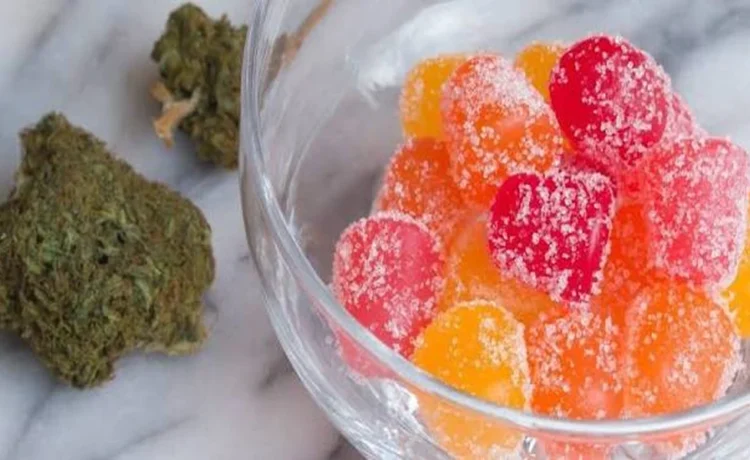
What separates the two terms?
THC works as an umbrella label covering every psychoactive cannabinoid, while delta 9 names one specific molecule sitting inside that group. Distinction rests upon naming precision rather than upon composition.
Retail language muddies this constantly. Anyone comparing delta 9 gummies vs thc gummies meets two descriptions frequently pointing toward identical contents. Delta 9 remains a dominant psychoactive compound across cannabis material, so a piece marketed under either heading often carries the same molecule in similar quantities.
Precision arrived for commercial reasons rather than scientific ones. Hemp-derived preparations began naming delta 9 explicitly once federal allowance made that compound sellable outside dispensary channels. Generic THC wording stayed common across state-licensed shops, where nobody needed to distinguish anything. Two vocabularies grew from separate regulatory environments, and reading either heading says more about where something originated than about what it holds.
Why does labelling differ?
Origin decides which wording a seller may print, since hemp-derived and cannabis derived preparations sit under separate rule sets. Molecules inside both stay identical.
Hemp qualification depends upon the delta 9 concentration resting at or below 0.3 percent by dry weight. Naming that exact compound, therefore, doubles as a compliance statement. State-licensed cannabis carries no comparable constraint, so broader terminology survived inside dispensary settings without anyone objecting.
Availability follows from that split. Hemp-derived pieces reach general retail across many jurisdictions, while dispensary versions stay behind licensing requirements. Neither route guarantees stronger content. Milligram figures printed upon packaging answer that question far better than either heading manages.
Cannabinoid family members
- Delta 8 positioning
Delta 8 occupies a separate branch entirely, arriving through laboratory conversion rather than direct extraction. Reported response runs milder than delta 9 across most accounts, though controlled comparison stays scarce. Labelling here causes genuine confusion, since generic THC wording occasionally covers delta 8 preparations without saying so.
- THCA conversion behaviour
THCA tests beneath the threshold while raw, converting into delta 9 once heat reaches it. Finished gummies rarely exploit that arithmetic because nothing about their production involves heating afterwards. Flower preparations lean upon it heavily instead, which explains why gummy labelling stays comparatively plain.
- Delta 10 and HHC
Both appear inside hemp-derived catalogues alongside delta 9, arriving through conversion chemistry as well. Neither carries research depth comparable to delta 9, and blanket THC wording obscures which compound a piece actually holds.
Potency labels
Numbers settle what terminology leaves open. Milligram content per piece, delta 9 quantity stated separately from any combined total, and a batch-specific certificate covering that exact production run gives a buyer something workable. Serving size deserves a glance beside potency, since a stated figure occasionally covers two pieces rather than one.
Certificates dated years earlier answer nothing useful, and a printed code should match whatever a seller publishes. Independent laboratories carry more standing than in-house testing, since separation from a manufacturer removes an obvious conflict. Wording upon a front panel remains a marketing decision, while a certificate records measurement.
Both headings frequently describe one identical molecule presented under different commercial vocabulary. Sourcing route, milligram content, and independent testing separate preparations far more reliably than naming does, and checking those three details answers a comparison question no front panel wording can.