
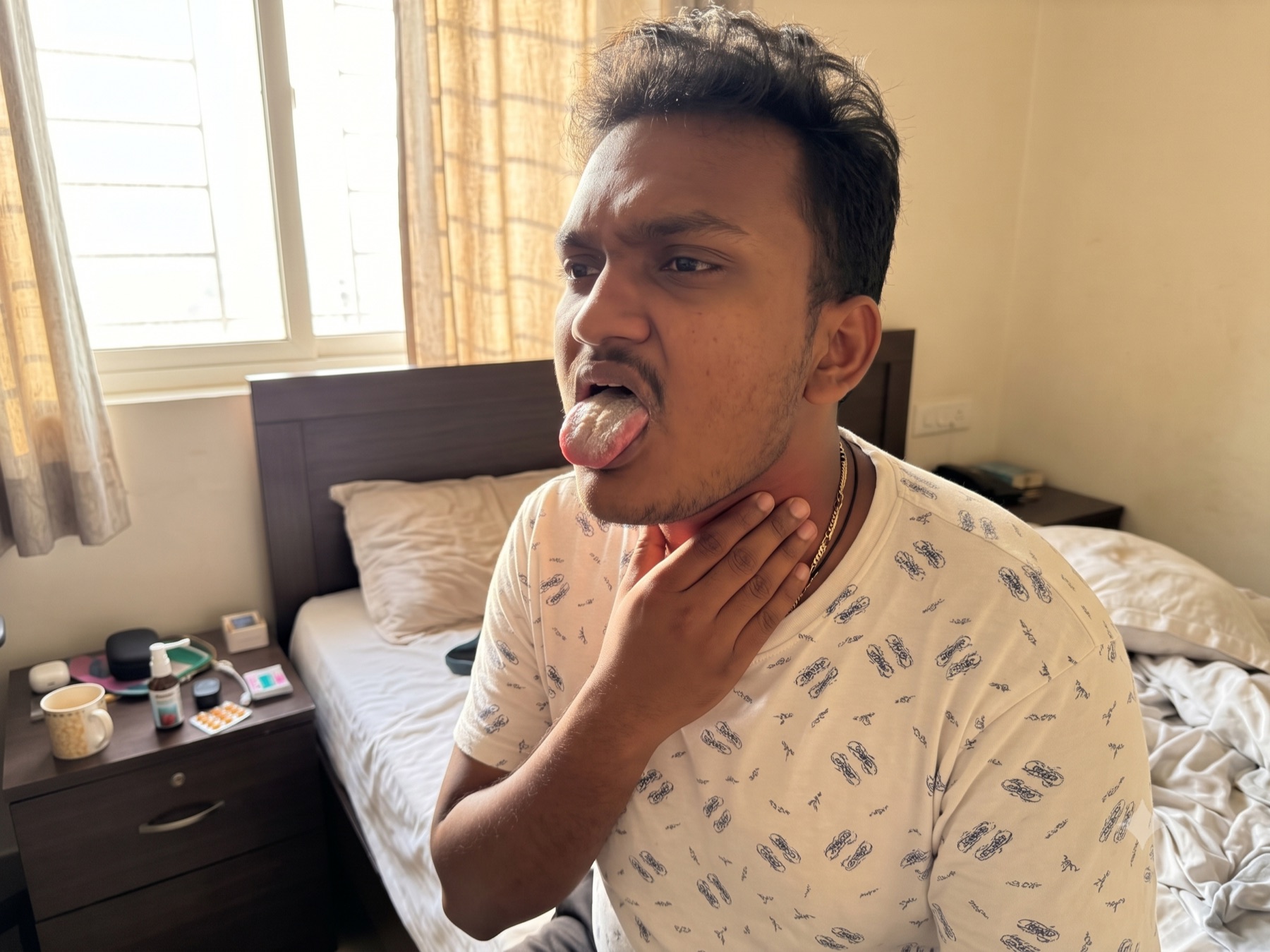
If your mouth feels parched and your throat feels scratchy when you wake up, the pattern often begins during sleep. Saliva production normally falls overnight, while mouth breathing, nasal congestion, dry indoor air, or a medicine can increase dryness further. An occasional episode is usually manageable at home. A repeated pattern deserves more attention because persistent dry mouth can increase the risk of cavities, oral infections, and difficulty chewing or swallowing.
This guide helps you do three things: identify the pattern, take safe first steps, and decide whether your next conversation should be with a dentist, a doctor, or an urgent-care professional.
Quick answer: Start by looking for nasal congestion, nighttime mouth breathing, a recent medication change, or a very dry bedroom. Protect your teeth with fluoride toothpaste, hydrate normally, and avoid tobacco and alcohol-based mouthwash. Contact a dentist or doctor if symptoms persist, occur throughout the day, or appear with dental problems, loud snoring, breathing pauses, fever, difficulty swallowing, or other concerning symptoms.
What to Do Tonight
If the dryness is mild and you have no urgent warning signs, these are reasonable first steps:
- Brush with fluoride toothpaste before bed, then spit without rinsing. Immediate rinsing removes much of the fluoride left on the teeth.
- Keep water nearby and hydrate normally during the day. Do not try to correct an entire day of low fluid intake by drinking a large amount immediately before sleep.
- Address simple nasal stuffiness safely. Saline spray or rinse may help some people. Ask a pharmacist or clinician before using a decongestant, especially if you have high blood pressure, take other medicines, are pregnant, or plan to use a medicated nasal spray for more than the label allows.
- Check the bedroom rather than automatically adding moisture. The U.S. Environmental Protection Agency recommends keeping indoor relative humidity around 30% to 50%. If the room is genuinely dry, a properly cleaned humidifier may help. Too much humidity can encourage mold and dust mites.
- Do not start mouth taping as a general home remedy. It does not identify why you are mouth breathing and may be unsafe when nasal obstruction or a sleep-related breathing disorder is present.
These steps can reduce irritation, but they do not replace evaluation when the problem is persistent or accompanied by warning signs.
Why Dry Mouth and Sore Throat Often Appear Together
Saliva lubricates the mouth, helps with swallowing and taste, clears food debris, buffers acids, and supplies minerals that help protect tooth enamel. Saliva flow naturally decreases during sleep. If you also breathe through an open mouth, air passes repeatedly over the tongue, gums, palate, and throat, increasing moisture loss.
That shared mechanism explains why the two symptoms often arrive together. The mouth feels sticky or dry because there is less moisture on the oral tissues, while the throat feels rough because its lining has also been exposed to dry airflow. However, the combination is not specific to one condition. A respiratory infection, medication effect, sleep-related breathing problem, or persistent salivary-gland issue can create a similar morning experience.
The Most Common Patterns and the Next Step
The following table is a guide for choosing a next step, not a diagnostic tool.
| What you notice | What the pattern could fit | A reasonable next step |
|---|---|---|
| Dryness is worst on waking and clears after drinking or eating | Mouth breathing, snoring, nasal congestion, or a dry bedroom | Track the pattern for several nights and try the low-risk measures in this article |
| Symptoms began after starting or changing a medicine | Medication-related dry mouth | Ask the prescriber or pharmacist to review the timing and alternatives; do not stop the medicine yourself |
| Loud snoring, witnessed breathing pauses, gasping, morning headaches, or marked daytime sleepiness | Possible sleep apnea or another sleep-related breathing problem | Arrange a medical evaluation; a sleep study may be needed |
| Dry mouth continues through the day or comes with dry eyes, trouble swallowing dry food, frequent urination, or unusual thirst | A persistent salivary or medical cause | Discuss it with a doctor and dentist rather than treating it only as a bedroom issue |
| New cavities, tooth sensitivity, burning mouth, sores, white patches, or a denture that has become uncomfortable | An oral complication of dryness | Book a dental examination |
| Fever, swollen neck glands, cough, marked fatigue, or symptoms that continue beyond the morning | Infection or another throat condition | Contact a healthcare professional, particularly if symptoms are worsening |
| Trouble breathing, inability to swallow liquids, drooling, blue or gray lips, severe dehydration, confusion, or rapidly increasing throat or facial swelling | A potentially urgent problem | Seek urgent medical care now |
What Causes a Dry Mouth and Sore Throat in the Morning?
Nighttime Mouth Breathing
Your nose warms, filters, and humidifies inhaled air. When you breathe through your mouth, that conditioning step is reduced and airflow moves directly over oral and throat tissues. A blocked nose, snoring, sleeping position, or an anatomic airway issue may contribute.
Mouth breathing is a clue, not a complete diagnosis. If it happens frequently, the useful question is not only “How do I keep my mouth closed?” but “Why am I unable to breathe comfortably through my nose while sleeping?” A consistent healthy daily routine can support hydration and sleep habits, but persistent nighttime breathing problems still require proper assessment.
Nasal Congestion or a Respiratory Illness
Allergies, colds, and sinus inflammation can make nasal breathing difficult. Congestion and throat symptoms can also occur with respiratory infections such as influenza, COVID-19, and some adenovirus infections.
An internal link cannot diagnose the cause. Consider the full symptom pattern, exposure history, current public-health guidance, and whether testing or medical evaluation is appropriate. Fever, breathing difficulty, dehydration, or worsening illness deserves more than a dry-mouth remedy.
Medications That Cause Dry Mouth
Hundreds of prescription and nonprescription medicines can contribute to dry mouth. Common medication groups include some antihistamines, decongestants, antidepressants, blood-pressure medicines, diuretics, bladder medicines, pain treatments, muscle relaxants, antiseizure or antispasmodic medicines, and GLP-1 receptor agonists. Taking several medicines can increase the likelihood of dryness. Alcohol, tobacco, and cannabis may also worsen oral dryness in some people.
If the timing matches a new medicine or dose change, record when the medicine is taken and when symptoms occur. Bring that information to the prescriber or pharmacist. Do not reduce or stop a prescribed medicine without professional advice.
Persistent Dry Mouth or Xerostomia
“Xerostomia” describes the feeling of dry mouth. It may occur with or without an objectively measured reduction in saliva. Persistent dryness can be associated with medicines, dehydration, diabetes, Sjögren disease, cancer treatment involving the head or neck, nerve damage, and other conditions.
Dry mouth becomes more common with age largely because medicines and health conditions become more common—not because a dry mouth is a normal or inevitable part of aging. The National Institute of Dental and Craniofacial Research recommends asking a dentist or doctor to investigate persistent symptoms.
CPAP-Related Dryness
People using continuous positive airway pressure may notice dryness when air leaks through the mouth, a mask does not fit well, or humidification is insufficient. Do not stop CPAP because of dry mouth. The prescribing sleep team or equipment provider can review mask fit, leakage, humidification, and whether nasal congestion is interfering with treatment.
A Bedroom That Is Too Dry—or Too Humid
Heating and air-conditioning can lower indoor humidity. A humidifier can help when the room is truly dry, but more moisture is not always better. EPA guidance recommends approximately 30% to 50% indoor relative humidity. Keep the machine and surrounding area clean and dry, change water as directed, and do not allow condensation to collect on windows or walls.
My Throat Is Dry Even When I Drink Water—What Does That Mean?
If you find yourself thinking, “My throat is dry even when I drink water,” the problem may not be simple dehydration. Water can briefly moisten the mouth and throat, but it will not correct repeated mouth breathing, nasal obstruction, reduced saliva, a medication effect, reflux, smoke exposure, or very dry indoor air. An infection or another throat condition may also cause irritation that does not disappear after a drink.
Notice whether the dryness is limited to waking, continues throughout the day, or occurs with dry eyes, unusual thirst, frequent urination, snoring, breathing pauses, fever, white patches, or trouble swallowing. Persistent symptoms deserve a dental or medical review rather than repeatedly increasing water intake. Seek urgent care if you cannot swallow liquids, have difficulty breathing, are drooling, or develop rapidly increasing throat, tongue, face, or neck swelling.
Why Repeated Dry Mouth Matters to Teeth and Gums
Persistent dry mouth is more than a comfort issue. According to the National Institute of Dental and Craniofacial Research and the American Dental Association, inadequate saliva can increase the likelihood of tooth decay and oral infection and can interfere with tasting, chewing, swallowing, and speaking.
Potential consequences include:
- More cavities and enamel demineralization. Saliva clears sugars, buffers acid, and carries calcium and phosphate that help protect enamel.
- Tooth sensitivity. Demineralization and decay may make teeth more reactive to hot, cold, or sweet foods.
- Oral infection. Low salivary flow can make it easier for harmful organisms, including yeast, to overgrow.
- Mouth sores or burning. Dry tissues are more easily irritated by food, dental appliances, or oral-care products.
- Difficulty wearing dentures. Saliva helps with comfort, lubrication, and retention.
- Persistent bad breath. Reduced cleansing and a dry tongue can allow odor-producing compounds to accumulate.
Dryness can occur alongside gum inflammation, but bleeding or swollen gums should not automatically be blamed on dry air. Plaque-related gingivitis, brushing technique, medicines, and other conditions may also contribute.
What Is an Oral Hygiene Routine for Morning Dry Mouth?
An oral hygiene routine is the regular combination of brushing, cleaning between the teeth, and professional follow-up used to protect the mouth. When dryness is frequent, routine dental care is especially important because a dentist can adjust the recall schedule and fluoride plan to match your cavity risk. Use these measures to protect oral health without masking a problem that needs evaluation:
- Brush gently twice daily with fluoride toothpaste and a soft-bristled brush.
- Clean between the teeth daily with floss or an appropriately sized interdental brush.
- Angle the bristles toward the gumline and clean the margin gently; do not scrub the gum tissue.
- After brushing, spit out excess toothpaste and avoid immediately rinsing with water or mouthwash.
- Limit frequent sugary or acidic snacks, particularly near bedtime.
- Avoid tobacco and alcohol-containing mouthwash.
- Sip water as needed and consider sugar-free gum or sugar-free lozenges if you can use them safely. These may stimulate saliva but do not replace brushing or dental care.
- Ask a dentist about saliva substitutes, oral moisturizers, or additional fluoride if dryness is frequent or your cavity risk has increased.
- Follow the dental recall schedule recommended for your personal risk rather than assuming one interval suits everyone.
If strong flavors or foaming ingredients make an already sore mouth uncomfortable, some people tolerate alternative formulations better. Our guide to flavor-free and low-foam dental products explains what those labels mean. Whatever product you choose, confirm that the toothpaste contains an appropriate amount of fluoride unless your dentist has advised otherwise.
Dry Mouth Lozenges, Spray, and Mouthwash: What to Know
Over-the-counter products may make the mouth feel more comfortable for a limited time, but they do not cure dry mouth or identify its cause. The American Dental Association notes that evidence does not clearly establish one topical format as best, so safety, label directions, personal preference, and advice from a dentist or pharmacist matter.
Dry Mouth Lozenges
Dry mouth lozenges and sugar-free candies can stimulate saliva when the salivary glands still have some function. Choose a sugar-free product to avoid repeatedly bathing the teeth in sugar. Do not use a lozenge while sleeping, and avoid one if you have difficulty swallowing or a significant choking risk. Keep products containing xylitol away from dogs because xylitol is highly toxic to them.
Dry Mouth Spray
A dry mouth spray is an oral moisturizer or saliva substitute that may provide short-term relief when sipping water is inconvenient. Some people prefer a spray for nighttime awakenings or travel because it can be applied quickly. Use only as directed, stop if it irritates the mouth, and ask a dentist about persistent dryness or a rising cavity risk.
Dry Mouth Mouthwash
When choosing a dry mouth mouthwash, look for an alcohol-free formula because alcohol can aggravate dryness. A fluoride-containing rinse may be useful for some people at increased risk of decay, but the right product and timing depend on the rest of the fluoride routine. Mouthwash does not replace brushing or cleaning between the teeth, and using it immediately after brushing may rinse concentrated fluoride toothpaste away.
A Seven-Night Pattern Check
When symptoms are mild and there are no warning signs, a short record can make a medical or dental visit more productive. Each morning for seven nights, note:
- Dry-mouth severity from 0 to 10
- Sore-throat severity from 0 to 10
- Whether your nose felt blocked at bedtime or on waking
- Whether someone noticed loud snoring, gasping, or breathing pauses
- Bedroom humidity, if you have a reliable humidity gauge
- Evening medicines, alcohol, tobacco, or cannabis exposure
- Whether symptoms cleared after drinking, eating, and beginning the day
- Any daytime dryness, dry eyes, trouble swallowing, mouth sores, or increased thirst and urination
This record cannot diagnose the cause, but it gives a dentist, doctor, or pharmacist useful information about timing and possible triggers. Stop the self-check and seek care sooner if warning signs appear.
Should You Call a Dentist or a Doctor?
Start with a dentist when:
- You have new cavities, tooth sensitivity, bad breath that persists despite cleaning, gum changes, oral burning, sores, white patches, or denture discomfort.
- Dryness has become frequent enough that you need a personalized cavity-prevention plan.
- You are unsure whether your saliva flow appears reduced or whether an oral infection is present.
Start with a doctor when:
- You have loud habitual snoring, witnessed breathing pauses, gasping, morning headaches, or significant daytime sleepiness.
- Symptoms began after a medication change or occur with excessive thirst, frequent urination, dry eyes, joint symptoms, fever, ongoing congestion, or illness that is not improving.
- The sore throat persists well into the day or repeatedly returns without a clear dental explanation.
Seek urgent care when:
- Breathing is difficult.
- You cannot swallow liquids or are drooling because swallowing is too painful.
- Throat, tongue, neck, or facial swelling is progressing quickly.
- You have blue or gray lips, confusion, fainting, severe weakness, or signs of substantial dehydration.
Frequently Asked Questions
Why is my mouth dry in the morning but normal later?
That pattern often fits a nighttime factor such as mouth breathing, congestion, snoring, medicine timing, or low bedroom humidity. It does not prove the cause or rule out a medical condition. Persistent symptoms should still be discussed with a professional.
Dry Mouth and COVID-19: Is There a Connection?
People searching for “dry mouth COVID” may be wondering whether oral dryness proves they have the infection. Dry mouth has been reported by people with acute and post-COVID illness, but it is not specific enough to diagnose COVID-19 by itself. Fever and reduced fluid intake, mouth breathing caused by congestion, medicines, and changes in saliva may all contribute. If dryness appears with sore throat, cough, fever, fatigue, altered taste or smell, or a known exposure, follow current public-health advice about testing and medical care. Our COVID-19 guide provides additional context, but urgent breathing difficulty or other emergency warning signs require immediate care.
Can dry mouth damage my teeth?
Yes. Persistent inadequate saliva can raise the risk of demineralization, cavities, sensitivity, and oral infections. Fluoride toothpaste and appropriate dental follow-up are particularly important when dryness is frequent.
Should I use mouthwash before bed?
Mouthwash is optional and depends on the product and your needs. Alcohol-containing rinses can aggravate dryness in some people. Do not use mouthwash immediately after brushing if it will wash away concentrated fluoride from the toothpaste; follow the product directions and your dentist's advice.
What Should I Know About Biotene Dry Mouth Products?
Biotène dry mouth products include oral rinses, moisturizing spray, gel, and toothpaste formulations. They are intended to help manage symptoms temporarily; they do not diagnose the reason for dryness or restore normal salivary-gland function. Formulas and directions can change, so check the current label and use only the product designed for the purpose you need. A dentist or pharmacist can help you compare Biotène with other saliva substitutes or oral moisturizers, particularly if you have allergies, swallowing difficulty, frequent cavities, or ongoing symptoms.
Are You Supposed to Brush Your Gums?
You should clean gently along the gumline, but you should not scrub the gums themselves. Angle a soft-bristled toothbrush toward the point where the teeth and gums meet and use light pressure. If you are wondering, “Should you brush your gums?” because they bleed, feel sore, or look swollen, arrange a dental examination rather than brushing harder; persistent bleeding can signal inflammation or another problem that needs attention.
Is mouth taping a safe solution?
It should not be treated as a universal remedy. Nasal obstruction and sleep-related breathing disorders must be considered first. Discuss persistent mouth breathing with a healthcare professional rather than using tape to conceal the symptom.
Should I stop a medicine that causes dry mouth?
No. Ask the prescriber or pharmacist whether timing, dose, formulation, or an alternative can be considered. Stopping a prescribed medicine without guidance may be harmful.
The Bottom Line
Morning dry mouth and sore throat often reflect an overnight combination of reduced saliva, mouth breathing, congestion, or dry air. The useful response is not to guess at a diagnosis or cover up the symptom. Protect the teeth with fluoride, correct simple environmental or nasal factors safely, record the pattern, and choose the appropriate professional based on the accompanying signs.
If the problem persists, affects daytime eating or swallowing, produces dental changes, or appears with sleep-apnea symptoms or systemic symptoms, arrange an evaluation. Seek urgent care for breathing difficulty, inability to swallow liquids, rapidly increasing swelling, severe dehydration, or confusion.
Official and Research Sources
- National Institute of Dental and Craniofacial Research: Dry Mouth
- American Dental Association: Xerostomia (Dry Mouth)
- National Heart, Lung, and Blood Institute: Sleep Apnea Symptoms
- U.S. Environmental Protection Agency: Care for Your Air
- American Dental Association: Mouthrinse
- American Dental Association: ADA Seal Category Requirements
- PubMed Central: Xerostomia Prevalence in COVID-19 Patients—A Rapid Systematic Review
This article is for general education and does not replace diagnosis or treatment from a qualified dentist, physician, pharmacist, or other healthcare professional.