
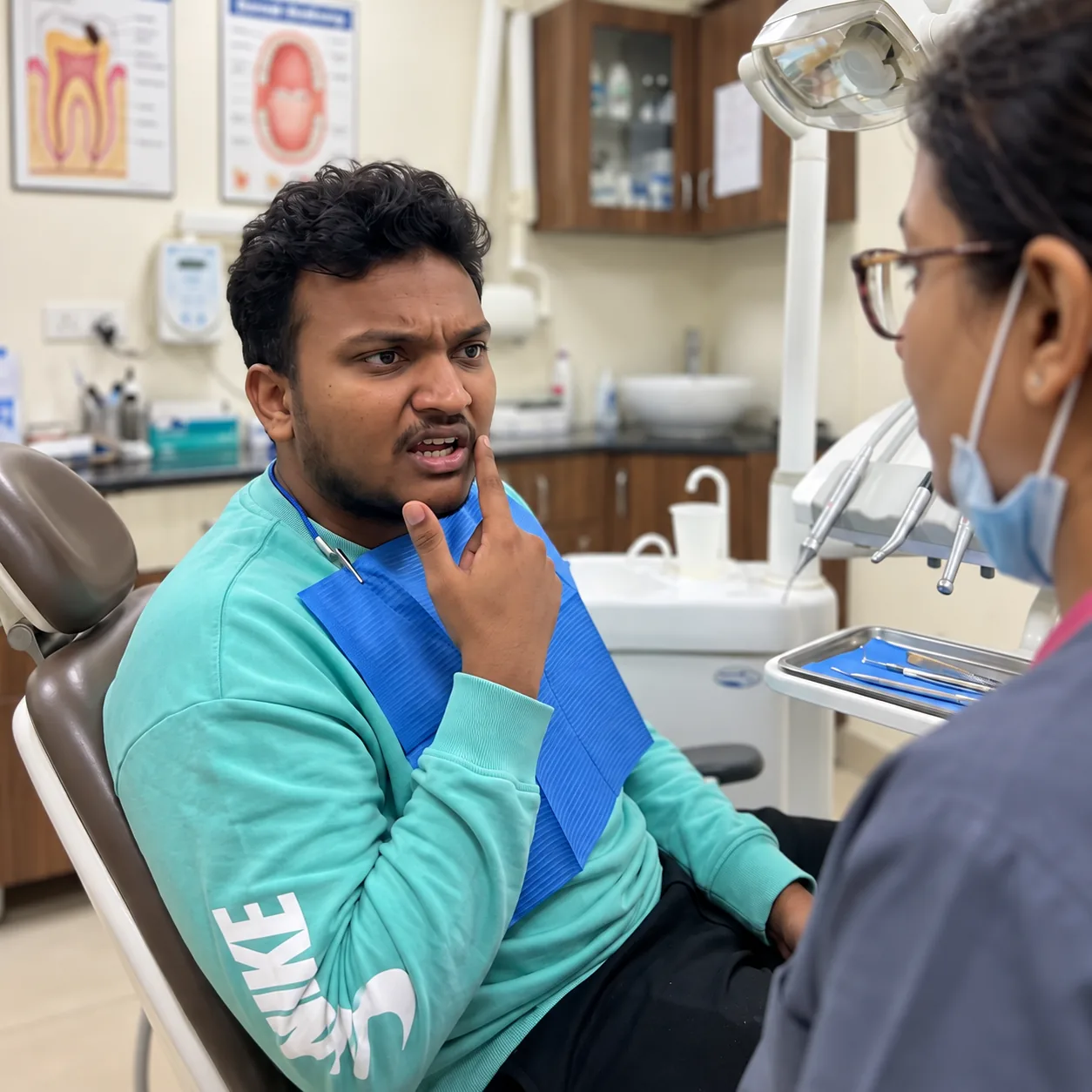
A single sore, bleeding spot can be strangely persistent. You may brush and floss regularly, yet the gum between the same two teeth turns red every time. Sometimes it bleeds only when touched. Other times you notice a metallic taste, discomfort while chewing, or a trace of blood on your toothbrush.
Quick answer: Pain and bleeding in one gum spot usually mean that specific area is irritated or inflamed. Common possibilities include plaque-related gingivitis, trapped food, a flossing injury, an irritating filling or crown, a deeper gum pocket, or an infection. The location alone cannot identify the cause, and repeated bleeding deserves a dental assessment.
Why Can Just One Small Area of Gum Bleed?
The gums do not have to become inflamed uniformly. Each gap between teeth has its own shape, access for cleaning, and exposure to plaque and food. A crowded lower tooth, a hard-to-reach back molar, or the edge of a dental restoration can create a trouble spot even when nearby gums look normal.
Plaque is a sticky bacterial film. When it remains at the gumline, the body's inflammatory response makes the gum more sensitive and likely to bleed. The National Institute of Dental and Craniofacial Research notes that plaque can harden into tartar, which cannot be removed by ordinary brushing or flossing. A localized patch of gingivitis is therefore possible, even in someone who takes good care of the rest of their mouth.
But blood does not automatically mean plaque. Mechanical irritation, a small injury, and other conditions can produce a similar appearance. The useful question is not simply where it bleeds, but when it bleeds, what changed recently, and whether other symptoms accompany it.
What Can Cause One Sore, Bleeding Gum Spot?
These clues are not a self-diagnosis. They can help you describe the problem accurately.
- It happens only when floss enters one gap. The site may be inflamed, or the floss may be striking the small triangle of gum between teeth. If it began immediately after a forceful flossing session, a minor injury is possible. Persistent repeat bleeding still deserves attention.
- The spot hurts after meals. A repeated sensation that something is wedged between two teeth may suggest food impaction. Fibrous meat, seeds, and popcorn fragments can lodge in a gap and irritate tissue. If food catches there every day, the reason for that gap should be assessed rather than repeatedly digging at it.
- It is beside a crown, filling, or bridge. A rough margin, overhang, or poorly shaped contact may make cleaning difficult or trap debris. This is a reason to have the restoration checked, not proof that dental work is defective.
- The gum is swollen, throbbing, or produces a bad taste. These symptoms increase concern about infection, particularly if there is a pimple-like bump or pus. An abscess requires prompt professional assessment.
- It keeps happening despite careful cleaning. Continuing bleeding at exactly one site is not necessarily a sign that you should floss harder. A dentist may need to examine the gum pocket, look for tartar or decay, and assess the restoration and tooth beneath it.
Why Do My Gums Bleed in One Spot Even Though I Floss?
Bleeding in one spot can persist even when the rest of the mouth looks and feels healthy. The pattern matters: note whether it began after a change in flossing, appears after meals, or occurs around a filling, crown, or bridge.
If bleeding began only after you started a new flossing routine and is steadily improving, the American Dental Association notes that it may settle within about a week. If you were already flossing regularly, or the same site keeps bleeding despite gentle daily care, arrange a dental appointment rather than cleaning more forcefully.
Technique matters. Slide floss carefully between teeth rather than snapping it down. Curve it into a C shape along one tooth, move it gently up and down, then clean the adjacent tooth surface. The goal is to remove plaque against the tooth, not scrape the gum itself. For a tight or unusual gap, a hygienist can recommend the most suitable interdental tool.
When Food Becomes the Repeated Trigger
Food trapping is easy to miss because the piece may dislodge before you inspect the area. A practical clue is whether discomfort begins after eating and fades after gentle cleaning. An area that repeatedly traps food may have a contact issue, tooth alignment difference, cavity, or restoration-related problem.
Do not poke sharp objects into the gum or repeatedly saw at a painful spot with floss. One careful pass with floss and a gentle rinse are reasonable; if the object remains stuck, or pain and bleeding continue, ask a dentist to remove it safely. Persistent food impaction may require treatment of the underlying cause, not just better cleaning.
Could It Be a Gum Pocket or Dental Abscess?
A periodontal pocket is a space between tooth and gum that becomes deeper when supporting tissues are affected. Such pockets can hold plaque and tartar below the gumline. The dentist or hygienist can gently measure pockets around the relevant tooth and compare them with neighboring sites. Depending on the findings, they may recommend professional cleaning or additional periodontal treatment.
An abscess is different: it is an infection with a collection of pus. Warning signs may include worsening or throbbing pain, swelling, tenderness when biting, a bad taste, fever, or a raised bump on the gum. Some abscesses drain intermittently, temporarily reducing pressure without curing the infection. Never squeeze or puncture a swelling yourself.
A dental abscess will not go away on its own and needs urgent dental treatment. Treatment may involve drainage, root-canal treatment, or extraction. Antibiotics are not automatically needed and do not replace definitive dental care; a dentist decides when they are appropriate.
Call 911 or go to an emergency department for difficulty breathing, speaking, or swallowing; a lot of mouth or facial swelling; swelling near the eye or vision changes; or major difficulty opening the mouth.
What You Can Safely Do Today
Keep brushing twice daily with a soft-bristled brush and fluoride toothpaste. Clean between your teeth gently once daily, unless a dental professional advises otherwise. If a particular movement clearly injures the gum, stop using that forceful technique rather than abandoning all cleaning. You can rinse with warm salt water for temporary comfort, but this will not remove tartar or treat an abscess.
If the area is sore, choose softer foods and avoid chewing hard items directly against it. Do not apply aspirin to the gum, attempt to drain a bump, or self-prescribe leftover antibiotics. If you use blood-thinning medication, do not stop it without speaking to the prescribing clinician.
Try keeping a simple note: which tooth gap is affected, whether bleeding occurs with brushing, flossing, eating, or spontaneously, how long it lasts, and whether swelling or a bad taste appears. This makes the dental visit more useful than repeatedly testing the spot to see if it still bleeds.
When Should You See a Dentist?
Arrange a dental visit if the same spot repeatedly bleeds, especially if you were already flossing regularly, it is not steadily improving, it occurs without touching the gum, or it comes with ongoing pain. Do not wait if pain is worsening or the area is notably swollen. Ask for urgent dental assessment if you suspect an abscess, see pus, develop fever, or have swelling and pain when biting.
Contact a dentist or clinician if bleeding is heavy, does not stop promptly, or occurs with unexplained bruising or bleeding elsewhere. A sore, lump, or unusual patch that persists for two weeks should be examined, even if it does not hurt. If you take a prescribed blood thinner, do not stop it without medical advice.
At an appointment, the dentist may inspect the gum and tooth, measure the pocket, check the contacts and edges of restorations, and take an X-ray when indicated. There is no single test required for every bleeding spot; evaluation depends on what the examination shows.
Frequently Asked Questions
Why do my gums only bleed in one spot and nowhere else?
A localized source of plaque, food trapping, injury, or irritation may affect one gap more than other areas. A periodontal pocket or dental problem is also possible. Location alone cannot determine the cause.
What if my gums bleed in one spot when flossing but do not hurt?
Painless bleeding still matters. Early gum inflammation may be relatively painless. Use gentle technique and schedule an evaluation if it keeps recurring or does not improve.
Should I stop flossing the bleeding area?
Do not keep snapping floss against sore tissue, but do not assume that avoiding all cleaning will fix inflamed gums. Use a gentle C-shaped technique and seek advice if bleeding persists or cleaning is painful.
Can a filling cause bleeding years after it was placed?
It can contribute if the margin or the contact between teeth creates an area that retains plaque or food. Only a dental examination can determine whether the restoration is involved.
Is one bleeding gum spot always serious?
No. Minor local irritation can resolve. However, repeat bleeding, persistent tenderness, spontaneous bleeding, swelling, or a bad taste should not be dismissed merely because the rest of the mouth feels healthy.
The Bottom Line
One sore gum spot is a location to investigate, not a diagnosis. The most useful next step is gentle cleaning, careful observation, and professional assessment when bleeding persists or warning signs appear. If your gum is repeatedly bleeding between the same teeth, describe the exact pattern to your dentist. That detail may help identify an otherwise overlooked food trap, restoration issue, or localized periodontal problem.
Related Healthy B Daily guidance
Sources
- American Dental Association: Bleeding Gums
- American Dental Association: Flossing
- National Institute of Dental and Craniofacial Research: Periodontal (Gum) Disease
- MedlinePlus: Bleeding Gums
- American Dental Association: Antibiotics for Dental Pain and Swelling
- National Institute of Dental and Craniofacial Research: Oral Cancer
This article is for general education and does not replace diagnosis or treatment from a qualified dentist or other healthcare professional.